
By Jason Georgatos, President, Partners for Growth
Growth-stage technology businesses rarely lose investor attention because demand disappears. The scale of capital chasing these businesses can obscure that reality. According to the State of Australian Startup Funding Report 2025, Australian startups raised approximately $5.4 billion across 390 deals during the year, a 31 percent increase on 2024. Investors are not rewarding growth alone; they are underwriting the ability to sustain it.
That shift in emphasis, from growth at any cost to growth that holds up under scrutiny, has changed the questions investors ask. Rapid revenue growth still draws attention, but it is no longer sufficient on its own. Investors want evidence that a business can keep creating value as it becomes larger, more complex, and harder to run on instinct alone.
Having partnered with more than 250 technology-enabled businesses globally, I have had the opportunity to observe companies across industries and stages of growth. Every business is different; those that continue attracting capital over multiple funding cycles tend to share many common traits.
The constraint is rarely demand
Many technology companies experience periods of rapid expansion. Far fewer maintain momentum as their organisations become larger and more complex. In my experience, businesses rarely lose momentum because demand disappears. More often, growth exposes weaknesses that were easy to overlook at an earlier stage: as teams expand, customers become more demanding, decision-making becomes more layered, and the quality of leadership and operational execution starts to matter more than it did a year earlier.
Investors understand this transition well. They want proof that a management team can scale the organization with the same discipline it took to build it.
They develop advantages that compound
Technology can create an early advantage, but sustaining it takes more than product innovation. As AI continues to lower the barriers to building technology itself, competitive advantage is shifting toward who can build an enduring business rather than who can ship the best product first. Investors are placing more weight on customer relationships, leadership, and operating capability because these are the characteristics that are hardest to replicate over time.
Employment Hero is a good example. As the business expanded internationally, its success wasn’t defined by a single funding milestone. It continued investing in product, leadership, and operations while it scaled across multiple markets, and that consistency, more than any single raise, is what built a durable business.
They protect focus as complexity increases
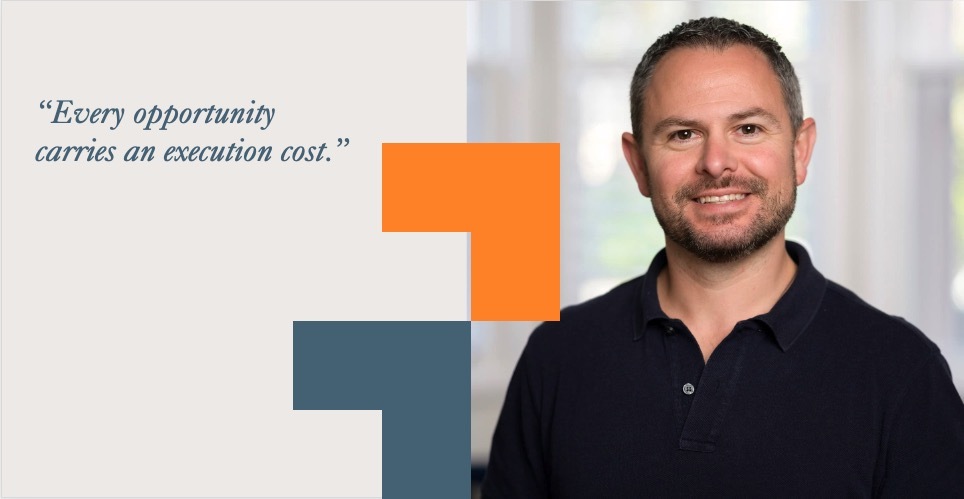
Growth creates opportunities, but the strongest businesses I have worked with recognise that every opportunity carries an execution cost. Some have deliberately delayed international expansion until their operating model was repeatable. Others chose to deepen their position in one market before entering another, or to strengthen a core product before broadening what they offered. These decisions rarely make headlines, but they are often what separates a business that keeps compounding value from one that spreads itself too thin, because complexity has a way of diluting execution when priorities become unclear.
They treat capital as a strategic resource
One of the biggest differences between businesses that continue attracting investment and those that lose momentum is how deliberately their management teams think about capital. The strongest operators treat capital as something that should reinforce strategy, rather than simply extend the runway. They think carefully about ownership and future funding requirements, because every capital decision narrows or widens the options available later. Skip Loans provides a strong example of that approach. Rather than relying heavily on equity at launch, the business partnered with Partners for Growth on an asset-backed facility that scaled alongside its loan book, enabling its lending capacity to grow while preserving founder and early investor ownership. Investors read that kind of capital discipline as a signal of management quality, because it reflects long-term thinking rather than a focus on the next funding event.
The patterns hold across markets
Working alongside businesses in software, consumer technology and enterprise platforms has reinforced how consistent these patterns are, regardless of sector or geography. The strongest businesses invest in operating capability before it becomes a constraint. They strengthen leadership as the organisation grows, remain disciplined about where they deploy capital and continue adapting as markets evolve. None of that happens through a single funding round or one period of rapid growth. It happens through hundreds of smaller, disciplined decisions made along the way.
As funding markets mature and investors grow more selective about where they deploy capital, these characteristics matter more than they used to. Resilience, operational maturity, and the capacity to keep executing while scaling are what investors are rewarding now.
The discipline behind compounding value
In my experience across growth stage investing, the businesses that keep compounding value are rarely the ones chasing the fastest growth. They make disciplined decisions at every stage of their evolution.
—
The views expressed are my own and do not necessarily reflect those of my employer.
This content is for informational purposes only and does not constitute an offer to sell or a solicitation of an offer to buy any securities. Any such offer will be made only to qualified investors through confidential offering documents. All investments involve risk, including the possible loss of principal. Past performance is not indicative of future results.



